
Multi-Sig Escrow
Transactions on the platform are protected through a multi-signature escrow system, requiring authorization from multiple parties before funds are released. This architecture reduces single-point trust failures.
Nexus Market is one of the most active Tor-based marketplaces currently operating on the dark web. This resource provides factual, open-source information about its structure, access methods, supported cryptocurrencies, and security considerations — purely for informational and research purposes.
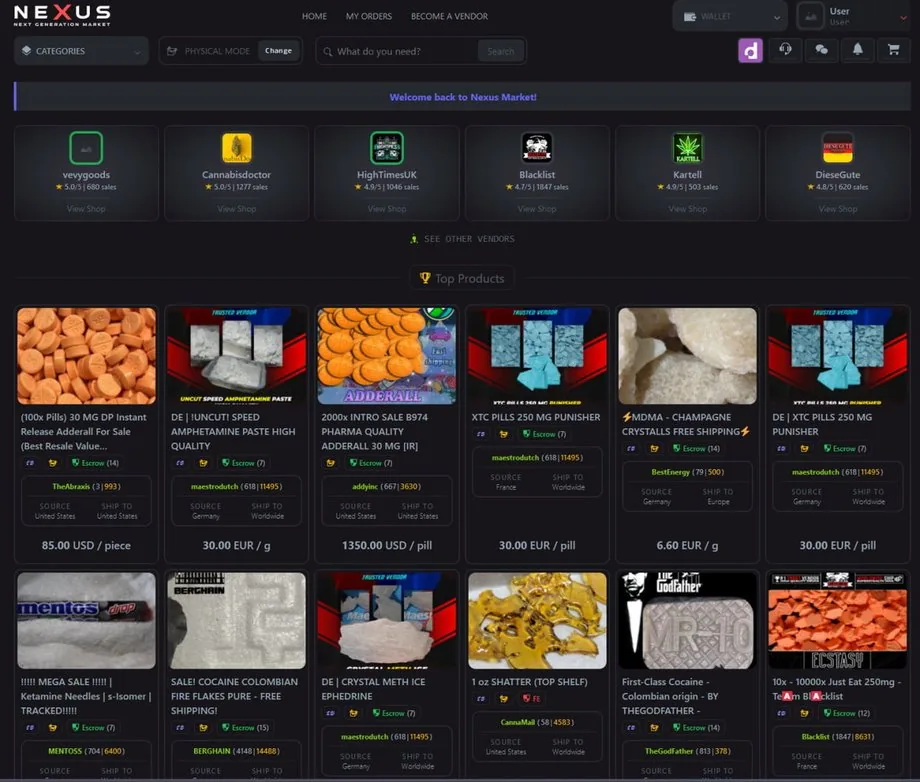
An overview of the structural and technical characteristics that define the Nexus darknet platform's operational model.
Transactions on the platform are protected through a multi-signature escrow system, requiring authorization from multiple parties before funds are released. This architecture reduces single-point trust failures.

All communications between users and vendors are end-to-end encrypted using PGP. Messages cannot be read by platform operators or intercepted by third parties. Users are required to verify vendor PGP keys before transacting.

The platform accepts Monero (XMR) as the primary payment method, alongside Bitcoin (BTC) and Litecoin (LTC). XMR is the recommended option due to its ring-signature and stealth address privacy properties.

Vendors must complete a registration process and post a security bond before listing products. Public reputation scores, transaction counts, and buyer reviews are visible on each vendor profile.

The Nexus darknet operates exclusively through the Tor network, using v3 .onion addresses. This prevents IP-based identification of users. Access requires the Tor Browser or Tor daemon configuration.

The platform operates a structured dispute system for unresolved transactions. Buyers may open a formal dispute within the escrow period; a neutral arbitration process determines fund allocation based on submitted evidence.
A brief history of crypto, what privacy coins are, and which assets are accepted on the platform.
Cryptocurrency emerged as a decentralized alternative to conventional banking. Bitcoin's 2009 launch introduced trustless peer-to-peer value transfer. By 2014, privacy-focused coins such as Monero appeared, adding obfuscation layers to transaction data that Bitcoin's transparent ledger lacks.
Darknet markets adopted Bitcoin early, but its public blockchain made transaction analysis possible for law enforcement. This drove migration toward privacy coins — particularly Monero — whose protocol-level privacy is built in rather than bolted on.
Privacy coins use cryptographic techniques to obscure transaction sender, recipient, and amount data on the blockchain. Monero applies ring signatures, stealth addresses, and RingCT. These methods make transaction graph analysis computationally infeasible without the private keys.
Bitcoin and Litecoin remain partially transparent. Tools like CoinJoin or Lightning Network add some privacy layers, but neither matches Monero's default-on obfuscation model.
Default privacy coin. Ring signatures hide sender identity. Stealth addresses mask recipient. RingCT conceals transaction amounts. All transactions private by default — no optional transparency. XMR usage guide →
Accepted but transactions are recorded on a public ledger. Users relying on BTC should use CoinJoin, a non-custodial mixer, or purchase via P2P to reduce traceability. BTC privacy guide →
Faster block confirmation than BTC with lower fees. Similar transparency model — public blockchain. Privacy considerations largely match Bitcoin; MWEB (MimbleWimble Extension Blocks) adds optional obfuscation. LTC privacy guide →
Recent platform updates, security advisories, and community developments — sourced from open-source reports.
An updated messaging layer with mandatory PGP integration was deployed, replacing the prior opt-in system.
Read more →
Monero subaddress support and improved wallet scanning speed reduce deposit confirmation times.
Read more →
A revised vendor onboarding process introduces tiered bonding and identity verification via PGP-signed proofs.
Read more →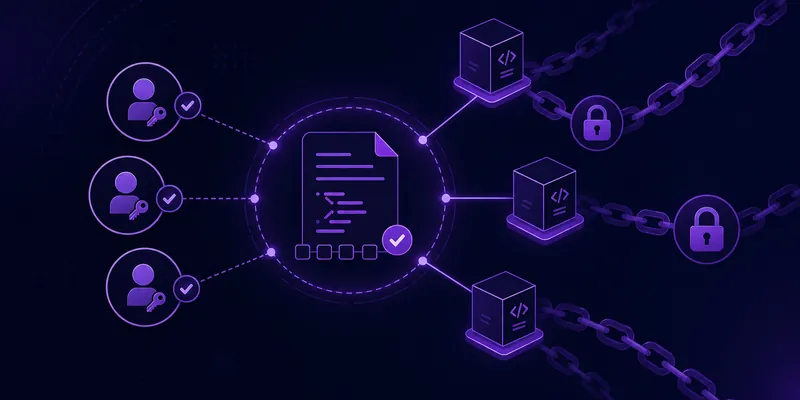
Escrow resolution timeouts extended from 7 to 14 days. Dispute arbitration workflow redesigned.
Read more →
Platform listing count crossed 50,000, reflecting growth across digital goods, physical goods, and service categories.
Read more →
A responsible disclosure report led to patching of two medium-severity session management issues.
Read more →
Third-party penetration testing results shared with the community. No critical findings remained unaddressed.
Read more →
Two additional v3 onion mirror addresses published to improve resilience against targeted DDoS disruption.
Read more →
Platform links to DanceSafe and TripSit drug testing and safety resources added to the information section.
Read more →Harm reduction is a public health approach that acknowledges drug use occurs and focuses on minimizing associated risks rather than promoting abstinence exclusively.
Fentanyl test strips and reagent testing kits (Marquis, Mecke, Simon's) allow users to detect adulterants. Substances acquired from unknown sources carry unpredictable potency and contamination risk.
Begin with the smallest effective dose, particularly when switching sources or vendors. Batch-to-batch potency varies significantly. Waiting to assess effect before redosing is a fundamental safety principle.
Having another person present — or using a buddy check-in service such as Never Use Alone (1-800-484-3731, US) — significantly reduces overdose fatality risk. If unconscious, no one can call for help.
Opioid overdose: slow or stopped breathing, blue lips, unresponsive. Stimulant overdose: chest pain, seizures, extreme hyperthermia. Naloxone (Narcan) reverses opioid overdose and should always be available.
Polydrug use multiplies risk. Opioids combined with benzodiazepines or alcohol can cause fatal respiratory depression. TripSit's combo chart at tripsit.me/combo is a reference for interaction risk levels.
Many jurisdictions have Good Samaritan laws protecting people who call emergency services during an overdose. Not calling due to fear of prosecution is a preventable cause of overdose death.
Operational security — commonly called OPSEC — refers to practices that prevent an adversary from gathering usable intelligence about your activities. For anyone researching darknet platforms, these principles are fundamental.
Never access onion addresses via a standard browser or VPN proxy. The Tor Browser bundles the correct Tor circuit routing and is hardened against fingerprinting. Download only from torproject.org.
Phishing sites replicate legitimate market designs. Always verify addresses against PGP-signed canary publications or trusted directories. The addresses listed on this site are verified at publication date.
Use a unique username, email, and password not linked to any clearnet identity. Never reuse credentials. A dedicated operating system such as Tails provides compartmentalization.
XMR transactions are private by default. Bitcoin transactions are publicly traceable. If using BTC, apply a non-custodial mixing method before depositing. Never send directly from an exchange.
Minimize any personally identifiable information shared during transactions. Use PO boxes or alternate delivery addresses where legally permissible. Vendors do not need your real name.
After each session, close all Tor Browser tabs, clear cookies, and power off the device. Tails OS writes nothing to disk by default. On standard OS, use full disk encryption and a dedicated browser profile.
Phishing pages targeting darknet markets are common. They mimic legitimate market interfaces and steal login credentials or deposit funds. Recognizing the signs is straightforward.
Before logging in, verify the full v3 onion address character-by-character. Phishing addresses differ in one or more characters and may appear visually similar at a glance.
Legitimate platforms publish regular PGP-signed canary messages. If the canary is missing, expired, or fails signature verification, treat the site as potentially compromised.
Legitimate Tor markets operate with JavaScript disabled (Tor Browser Security Level: Safest). A site requiring JavaScript to function is a signal to investigate further before trusting it.
Platform administrators never communicate via Telegram, Discord, or any clearnet messaging platform. Any such accounts are imposters.
Nexus Market is a darknet marketplace accessible exclusively through the Tor network. It operates on v3 .onion addresses and cannot be accessed through standard web browsers. The platform functions as a peer-to-peer trading environment where vendors and buyers transact using cryptocurrency.
Verified Nexus Website addresses are listed on the Access page of this resource. Always compare the full 56-character v3 onion address. Do not use links from social media, forums, or messaging apps without verifying them against PGP-signed canary publications.
The Nexus Darknet platform accepts Monero (XMR), Bitcoin (BTC), and Litecoin (LTC). Monero is the recommended option due to its protocol-level transaction privacy. Bitcoin and Litecoin transactions are visible on public blockchains and require additional privacy measures if used.
Using the Tor Browser and accessing .onion websites is legal in most jurisdictions. Tor is a privacy tool developed by the Tor Project, a US-registered non-profit. Researchers, journalists, and privacy-conscious users routinely use it. Legal status varies by country; users should check local laws.
For Nexus Access via any darknet market, Monero is recommended because its ring signature protocol, stealth addresses, and RingCT hide sender, recipient, and transaction amounts at the protocol level. Bitcoin transactions are traceable on the public blockchain, making chain analysis possible for third parties.
A PGP canary is a digitally signed statement published regularly by platform administrators confirming the platform has not been compromised or seized. If the canary is not updated on schedule, it signals users that the platform may be under duress or law enforcement control.