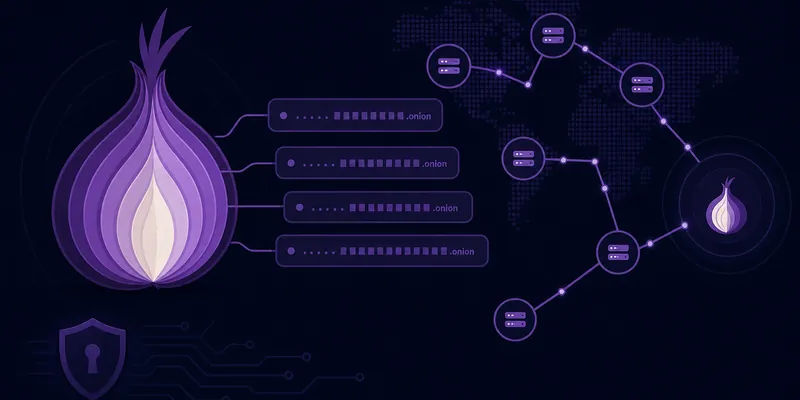
A new set of verified onion mirror addresses has been published for the platform, expanding the total set of accessible entry points to three confirmed working addresses. This update follows a period of intermittent accessibility caused by targeted distributed denial-of-service activity against the platform's primary hidden service. Understanding why mirrors exist—and how to use them safely—is essential knowledge for any regular user.
Onion services are not hosted on traditional internet infrastructure and cannot be protected by conventional CDN-based DDoS mitigation services. Instead, resilience is achieved through redundancy: multiple independent hidden service instances running on separate infrastructure, each with its own cryptographic identity, but all serving the same content and sharing authentication state through backend synchronization. When one mirror is overwhelmed or taken offline, users can switch to an alternate address without losing session continuity.
Why DDoS Attacks Target Darknet Markets
Layer 7 attacks against Tor hidden services have become increasingly sophisticated. Rather than volumetrically flooding bandwidth, modern attacks targeting onion services often exploit the computational asymmetry of the Tor handshake process—specifically, the introduction point circuit establishment that is required before any HTTP request reaches the hidden service. Because completing this handshake is more expensive for the server than for the client, attackers can exhaust server resources with relatively modest botnet capacity.
These attacks are conducted by multiple categories of actors: competing platforms seeking to drive traffic elsewhere, extortion actors attempting to force ransom payments, and occasionally coordinated efforts to disrupt specific markets. The motivations vary, but the impact on legitimate users is identical—service unavailability that may last hours to days if mirror infrastructure is not in place.
Having a tested, verified list of current mirror addresses on hand before an access disruption occurs is far more effective than attempting to find working addresses during an outage, when phishing sites exploiting the disruption are most aggressively promoted in forums and chat channels.
v3 Onion Addresses vs v2: Why the Distinction Matters
All current platform addresses use the v3 onion format. The difference between v2 and v3 onion addresses is not merely aesthetic—it reflects a fundamental cryptographic improvement. Version 2 onion addresses were 16 characters long and derived from RSA-1024 keys, a key size that has been considered inadequate for years and was formally deprecated by The Tor Project in October 2021. Version 3 addresses are 56 characters long and derived from Ed25519 public keys with SHA3-256 hashing, providing substantially stronger cryptographic guarantees.
Importantly, v3 addresses include a self-authenticating property: the address itself encodes the public key of the hidden service. This means that when your Tor Browser connects to a v3 onion address, it can cryptographically verify that it is communicating with the server that controls the corresponding private key—without relying on any certificate authority. This is a security property that the clearnet internet does not offer by default.
Any address that appears in v2 format (short, 16-character .onion) should be treated as suspect and not used. The platform has fully migrated to v3. Current verified addresses are listed in the access and links section, where addresses are maintained and updated whenever changes occur.
Verifying Addresses via PGP Canary
The definitive method for verifying that published addresses are authentic is PGP signature verification against the platform's canary. The canary is a digitally signed statement published at regular intervals that confirms the platform has not been compromised, lists the current valid onion addresses, and includes a recent date reference to prevent replay attacks using an old canary.
To verify a canary, you need the platform's public PGP key (available in the anti-phishing guide) and a working installation of GPG. Import the public key, download the latest signed canary document, and run gpg --verify canary.txt.asc. A valid signature confirms that the document was created by the holder of the private key—an identity that a phishing site cannot fake without compromising the platform's key material.
Never trust onion addresses sourced from Telegram channels, Reddit posts, or third-party sites that do not provide a PGP-signed canary. Phishing operations routinely distribute convincing fake addresses through these channels during periods of legitimate platform inaccessibility.